before the swallow dares: the daffodil in myth, magic & verse
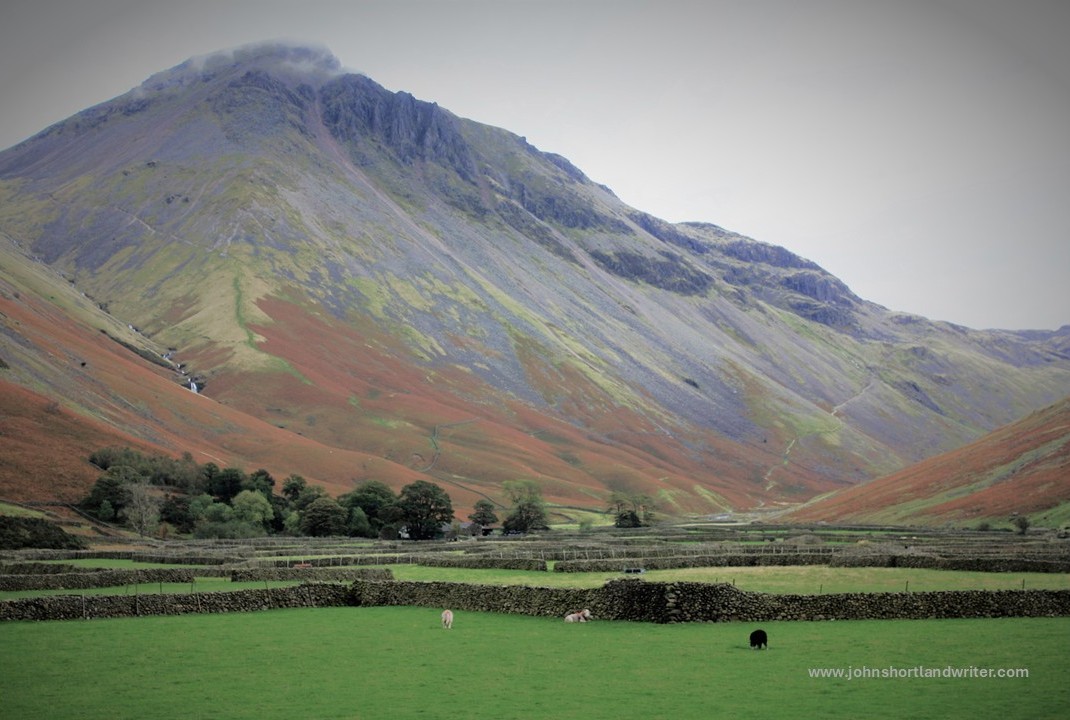
It is a remarkable fact that if you Google search daffodils in poetry, the great bulk of prompts are the same: Wordsworth’s I Wandered Lonely as a Cloud. Yes, it is a great poem and one I learnt as a very young child at school, now so very many years ago, but how has it come to dominate our thinking? Like many others, I now only remember the first line and the last, but how lovely it is to imagine William walking in the warm spring sunshine of 1807 through the vales of the Lake District with his sister Dorothy. Perhaps they had been commenting on the few cotton-wool clouds that drifted across the sky before suddenly coming across a host of golden daffodils.
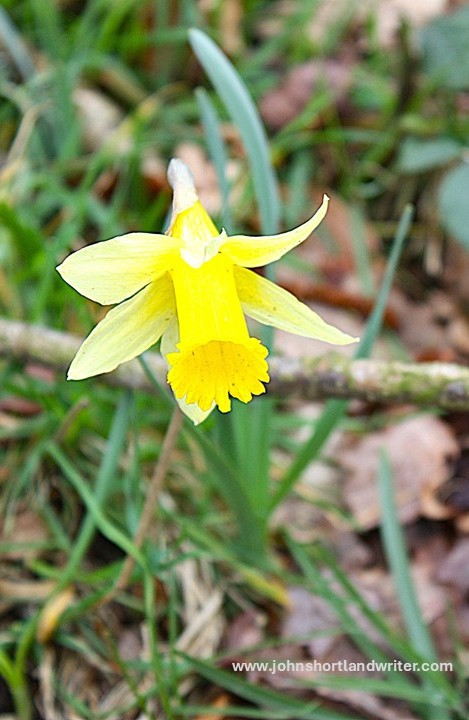
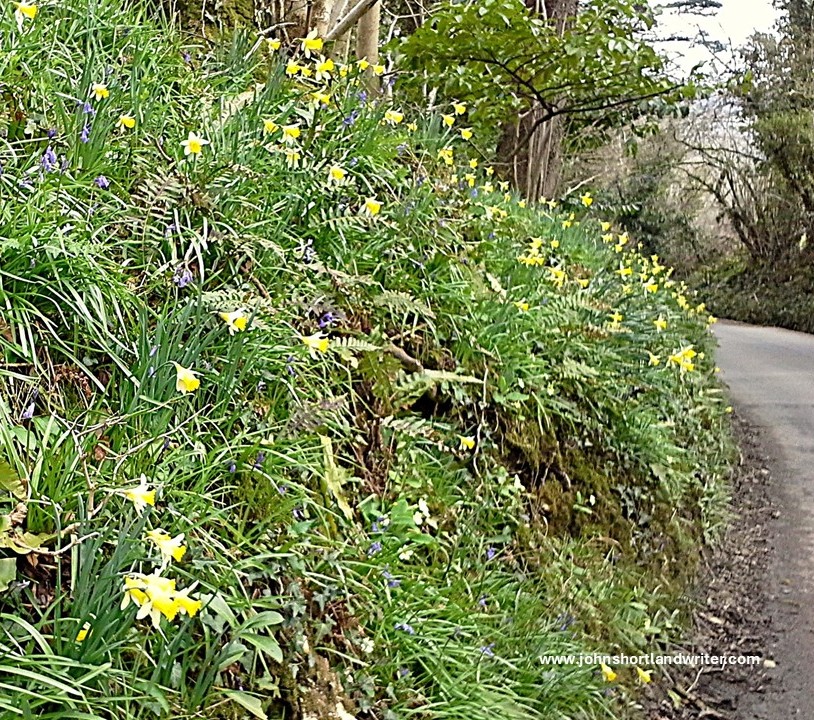
In more recent times, Ted Hughes has been equally moved by their colour – their bloomers of scrambled egg-yolk. He also captured perfectly how they appeared quite suddenly after lying seemingly dormant for months on a piece of land that he had purchased. He delighted not just in their beauty but even more in the opportunity to pick and sell them all, sevenpence a bunch. Only after, did he regret it, recognising his own frailty in theirs. Robert Herrick, writing verse three hundred years earlier had come to the same realisation.
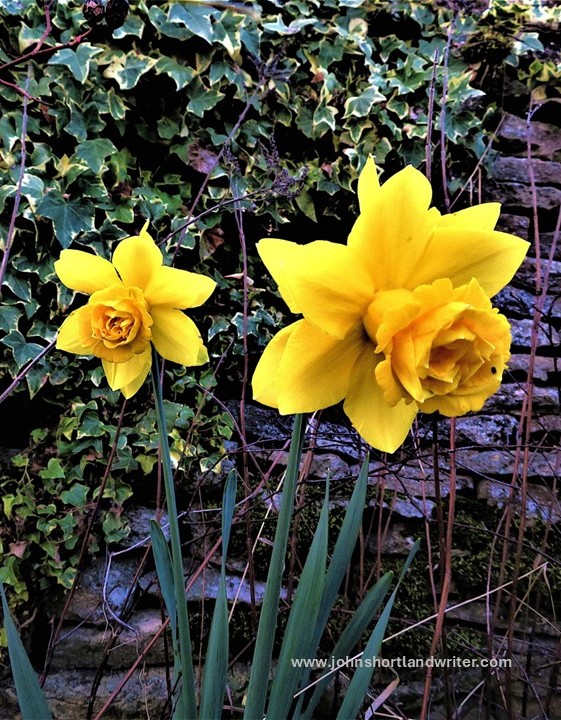
Perhaps it is because the daffodils are so eagerly anticipated each spring that we pine when they are all too quickly over. How we long for some bright golden colour in our gardens after the greyness of winter yet how we resent their dull, decaying leaves that linger far too long after the flowers fall. In the past, our grandparents would tidy them by tying their leaves into a knot, or worse, cut them off at ground level. Now we have learnt that it is necessary to let nature take its course if we want plenty of blooms in future years. From experience, I have found that it is fine to cut the leaves off six weeks after the flowers have finished. I describe how to avoid seeing this untidiness further down the page.
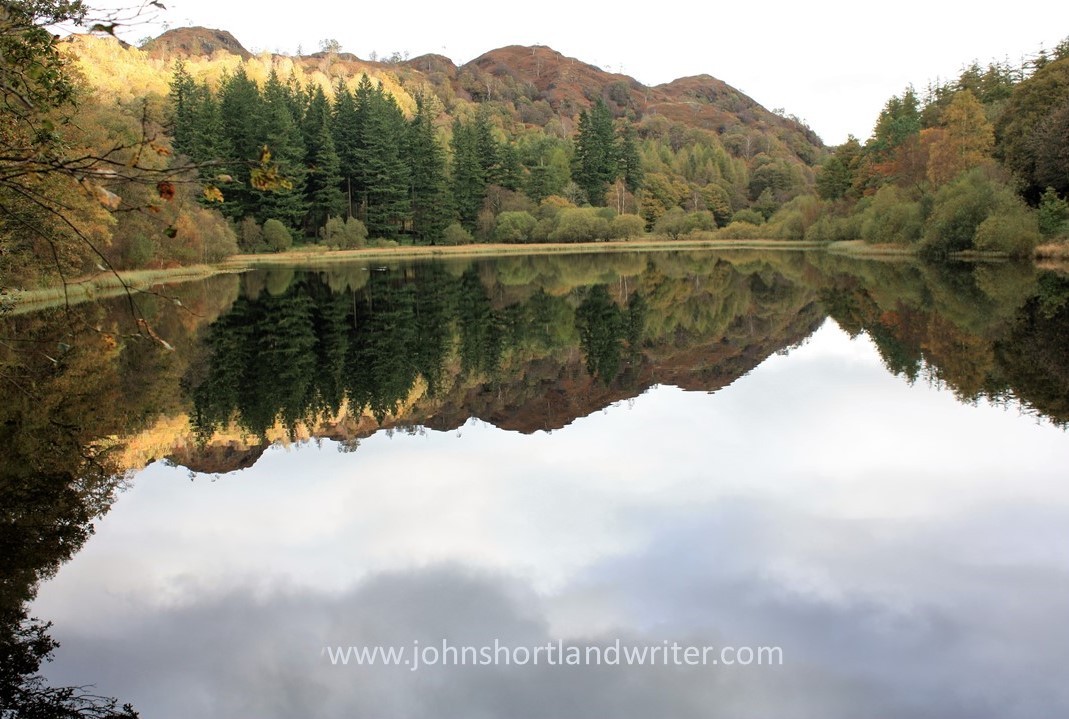
Wordsworth seems to be the only one that ignored the link between the daffodil’s beauty and the mortality of man. The story of Narcissus reminds us of our own demise. He was the stunningly handsome youth of Greek mythology who, seeing his own reflection in a pond, became so entranced by it that he remained there and pined away. From that spot the daffodil sprang and so each year, Narcissus (the botanical name for daffodil) entrances us with its beauty before dying and returning to below ground.
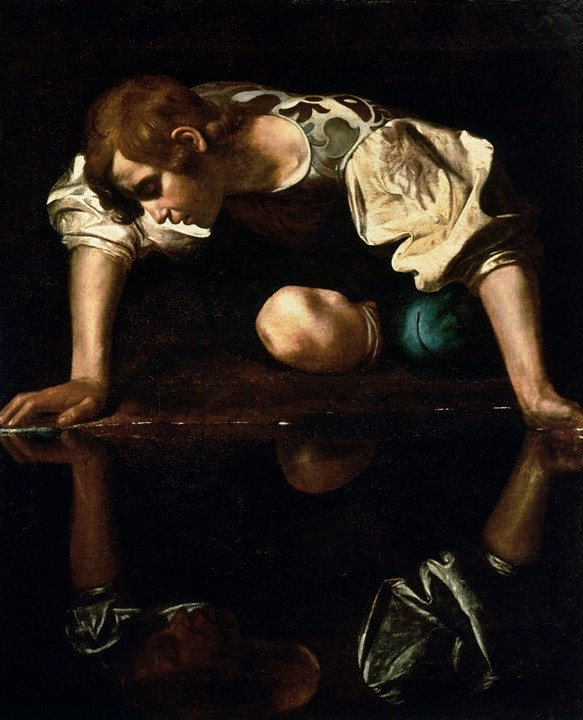
In witchcraft and magic the use of daffodils is mostly associated with fertility (rebirth) and rites of spring. They bring joy and self-esteem (although I would have thought that what happened to Narcissus might be a warning on overdoing the latter!) and bunches of daffodils in the house are a symbol of luck and renewal. However, a single daffodil is unlucky, perhaps again because of the story of that unfortunate youth. It is surprising that little seems to be mentioned in spells of the story of Pluto using the flower to entice Persephone into the Underworld, presumably by using the flowers narcotic qualities. Perhaps it is for that reason that I have found no use for any part of the bulb in herbal medicines for all parts are highly toxic: I once had them growing in a field where sheep and lambs regularly grazed and they avoided eating them; they don’t seem to be eaten by wild animals either. Anyone getting the sap from the cut stems on their skin will know just how sticky and unpleasant it is although I personally have never had any adverse reaction from it.
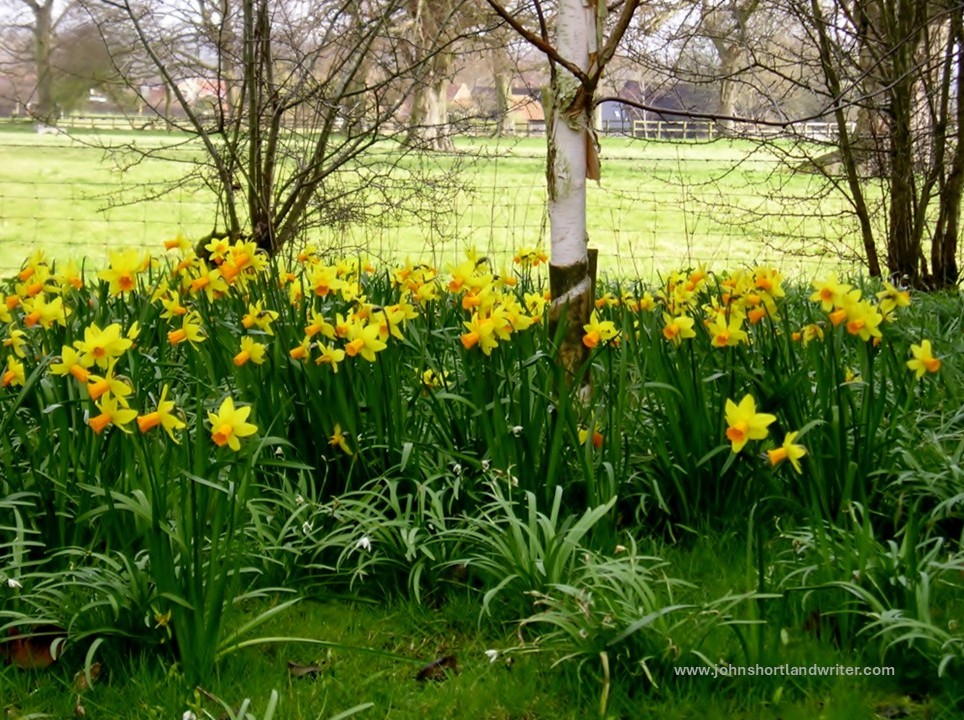
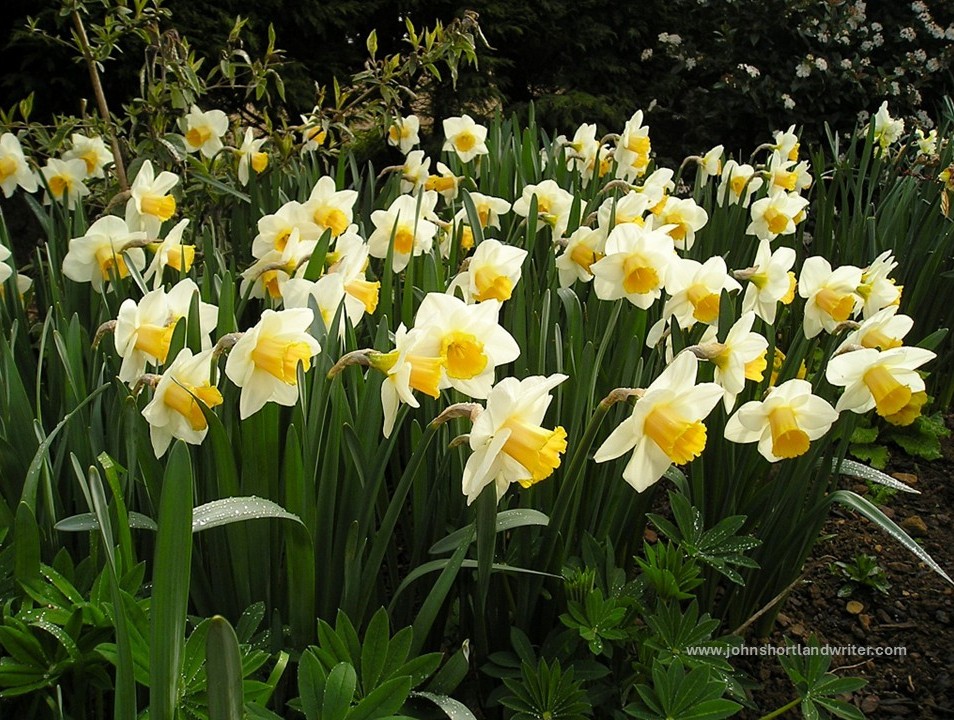
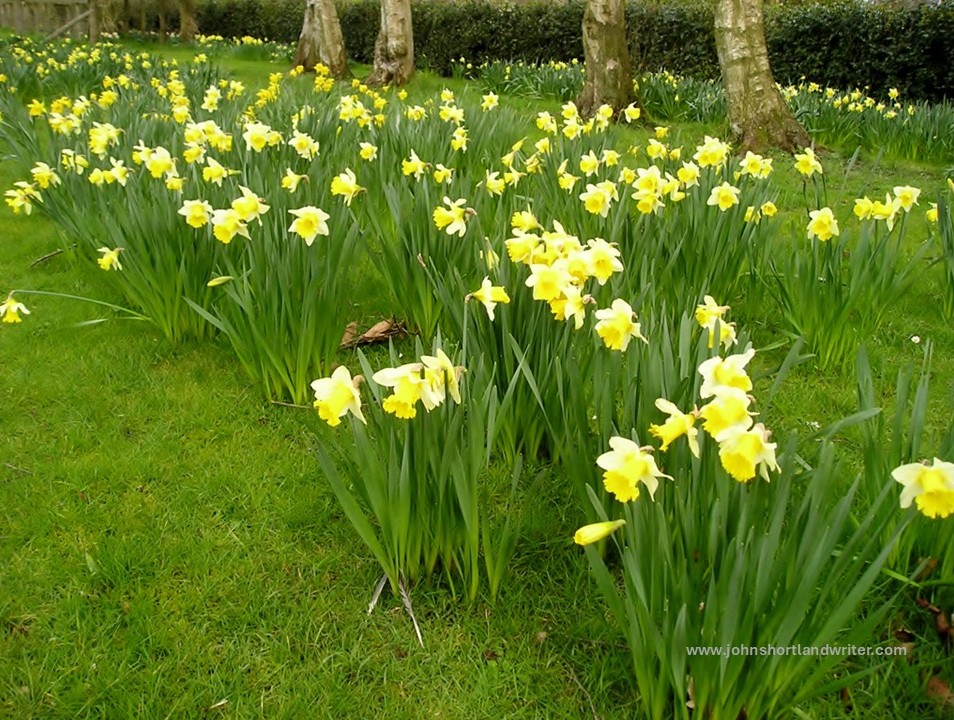
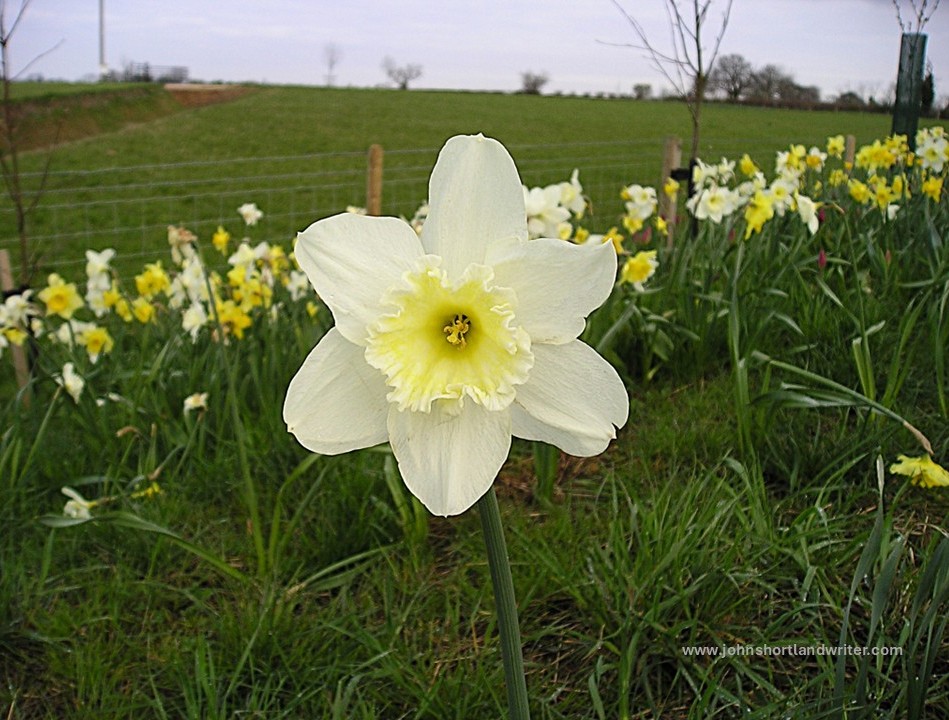
I have written before about planting daffodils in the garden so will concentrate here on growing them in grass and their aftercare. In borders, I always plant the bulbs far back (the flowers are bright enough to be seen but the untidy, dying leaves will be hidden). On driveways that isn’t always an option but where possible I plant them behind a strip of mown grass which improves the general appearance. It is essential that the bulbs are planted in groups for a lonely daffodil looks silly as well as unnatural. To make them look as if they have been growing there for decades gently roll handfuls of the bulbs and plant them where they land, and also in varying densities. To extend the flowering period mix different varieties – my usual combination is Carlton and St Keverne for all yellow flowers, adding Ice Follies if I want to mix in white ones. Plant as early as possible, say September although I have planted as late as November if the ground isn’t too wet or frozen. As mentioned, cut the leaves after six weeks from the end of flowering – usually the first week in June in our Cotswolds garden.
I Wandered Lonely as a Cloud
That floats on high o’er vales and hills,
When all at once I saw a crowd,
A host, of golden daffodils;
Beside the lake, beneath the trees,
Fluttering and dancing in the breeze.
Continuous as the stars that shine
And twinkle on the milky way,
They stretched in never-ending line
Along the margin of a bay:
Ten thousand saw I at a glance,
Tossing their head in sprightly dance.
The waves beside them danced; but they
Out-did the sparkling waves in glee
A poet could not but be gay,
In such a jocund company:
I gazed – and gazed – but little thought
What wealth the show to me had brought:
For oft, when on my couch I lie
In vacant or in pensive mood,
They flash upon that inward eye
Which is the bliss of solitude;
And then my heart with pleasure fills,
And dances with the daffodils.
For simple, straightforward ideas and advice on gardening and garden design why not take a look at my book. Written with no jargon so ideal for first-time gardeners as well as those with more experience. Available from all good bookshops and Amazon.

Notes:
i) Before the Swallow Dares is the lovely way Shakespeare writes of daffodils
ii) Daffodils by Ted Hughes – link here
iii) To Daffodils by Robert Herrick – link here


Your photos are beautiful and a good read too :) The lovely UK landscapes are one of the reasons I am always watching Escape to the Country. I can't get enough. Thank you for a delightful post.
ReplyDeleteMany thanks, Connie for your kind words. I very much appreciate you taking time to comment and glad that you enjoy my writing and photography. Makes it all so much more worthwhile.
Delete